
How to Find Balance Among Different Perspectives? Leonardo da Vinci answered this question in 1497 by drawing a polyhedron in which every vertex of each face remains equidistant from the center. Tuscany’s Maremma mirrors this perfect geometry—a multifaceted territory of forests, pastures, wheat and sunflower fields, medieval villages, olive groves, vineyards, farmsteads, and promontories.
From sea to hills, it embodies unspoiled nature, rich history, and food traditions deeply rooted in its soil.
Like the points of Leonardo’s Icosahedron Elevatus, Maremma’s landscape achieves a harmonious balance of nature, history, and human endeavor. This equilibrium echoes the balance needed while cycling, becoming one with the surroundings.
Here, pristine nature, ancient traditions, and local flavors merge into a slow-travel experience—far from life’s daily rush, offering rare moments of tranquility.
A land rugged and wild
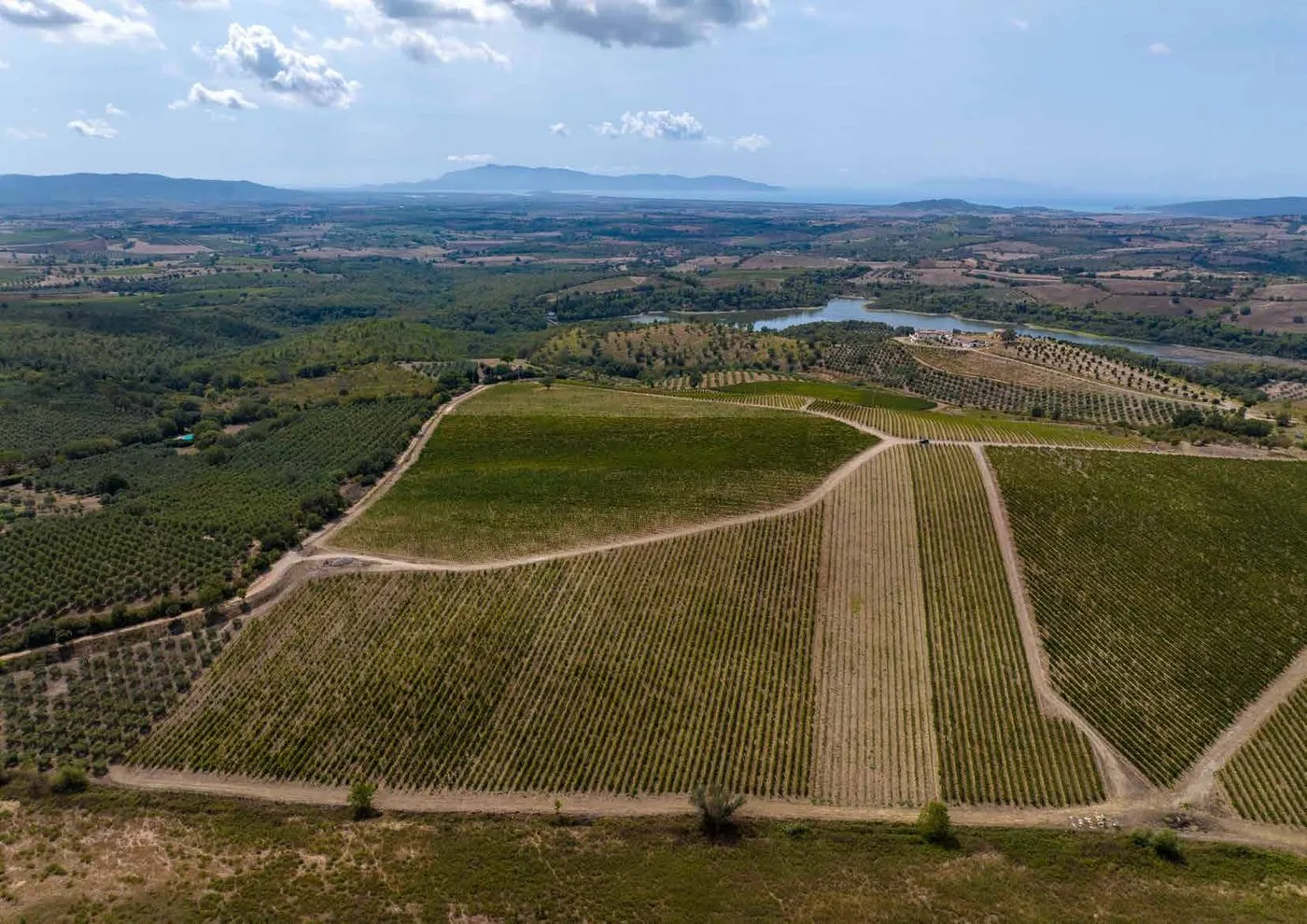
This region spans 5,000 square kilometers, from Mount Amiata’s volcanic soils to clay-rich coastal plains. Rolling hills cascade into flatlands, meeting the Orbetello Lagoon and Argentario Promontory—a testament to nature’s remarkable diversity. It’s a land both “rugged and wild”, as Francesco Mazzei, President of the Consorzio Tutela Vini della Maremma Toscana and CEO of his family’s historic winery, aptly describes.
The Consortium, established in 2014, safeguards a wine tradition dating back to Etruscan times. Today, it comprises 430 members, including 120 fully integrated wineries and 4 cooperatives, overseeing production throughout Grosseto province.
Its core mission focuses on protection and promotion, maintaining strict production standards. Mazzei emphasizes their commitment to developing wine tourism, enhancing visitor experiences. “We aim to showcase more than just the coast,” he explains.
“Our inland areas, though less known, offer extraordinary beauty—from protected natural reserves to Etruscan ruins and pristine medieval towns.”
Cycling tourism in the Maremma
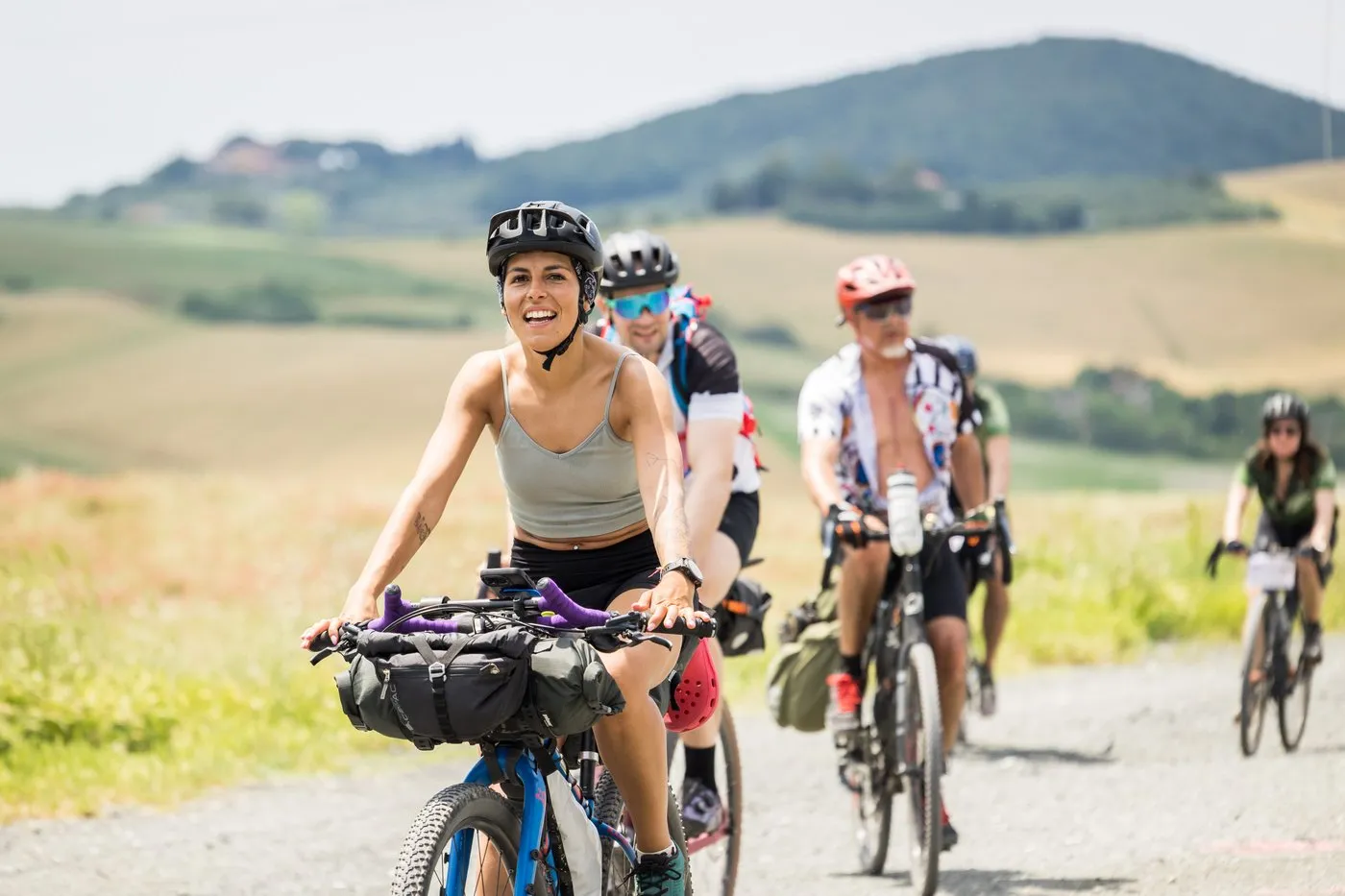
In this setting, cycling tourism thrives naturally. Maremma offers quiet, secluded roads winding through breathtaking landscapes—where nature and human touch create geometric patterns of farms and vineyards.
“Our partnership with Tuscany Trail helps showcase our region. These events align with our vision perfectly. Cycling allows visitors to truly experience, observe, and taste local products.”
Participants receive a DOC bottle in their rider kits and enjoy refreshment points hosted by the Consortium.
Ciliegiolo and L’Enoica
Drawing on generations of expertise, Mazzei understands evolving wine preferences—particularly among younger enthusiasts who favor immediate sensory experiences over technical analysis. The Consortium promotes Ciliegiolo, a native grape gaining favor for its approachable profile and cherry notes, now the eighth most cultivated variety in Maremma.
Beyond winemaking, Francesco Mazzei pursues cycling passionately. He merged these interests by creating L’Enoica, now celebrating its tenth anniversary. This cycling-tourism venture explores wine regions across Tuscany, Sicily, and Sardinia through carefully crafted routes. He describes it as a “club” for cycling enthusiasts willing to work for spectacular views.
Wonderfully unexplored
The Consortium aims to attract high-quality tourism, exemplified by the Tuscany Trail’s success in drawing thousands of cyclists.
“Maremma remains wonderfully unexplored—wild and unindustrialized, offering vast forests, extensive trails, pristine environment, and rich cultural heritage.”
This makes it perfect for experience-driven tourism centered on authenticity and local culture. As cycling events multiply and bike tourism grows, attracting those seeking meaningful travel, Maremma stands ready.
It’s yet another face of that polyhedron, maintaining perfect balance amid incredible diversity.