
This medieval village, overlooking a narrow, jagged gulf, holds treasures of a different kind—delicate and protected, precious and enchanting. Here you’ll find pristine landscapes, hidden beaches, breathtaking views, and villages rich in stone and flowers. Each curve, each climb reveals new wonders to those who pedal slowly, rewarding cyclists with views of the blue coast to the west and deep green hills to the east.
Legend tells of a pot of gold at the rainbow’s end. While that’s an Irish tale, Tuscany has its own treasure story: a castle atop a village where archaeologists found a vase containing a hundred gold coins from seven different mints, now preserved in one of Scarlino’s three museums.
Forty kilometres of cycle paths and a yellow flag
Scarlino forms part of the Tirrenica Cycle Route, offering 40 kilometers of cycle paths and low-traffic roads. The town’s commitment to sustainable mobility has earned it FIAB’s yellow flag for six consecutive years—recognition for developing infrastructure that serves both citizens and tourists. This cyclist-friendly approach attracts not only individual riders but also prestigious events that value attention to detail, care, and quality.
It’s a virtuous circle where everyone plays an active role and feels valued. Take Unpaved Roads, for example—an event that authentically connects with the territory, offering participants the region’s finest: unique local foods, lesser-known paths, challenging tracks, and excellent rest stops. These elements bring together visitors and residents to share the area’s rich social, economic, and historical heritage.
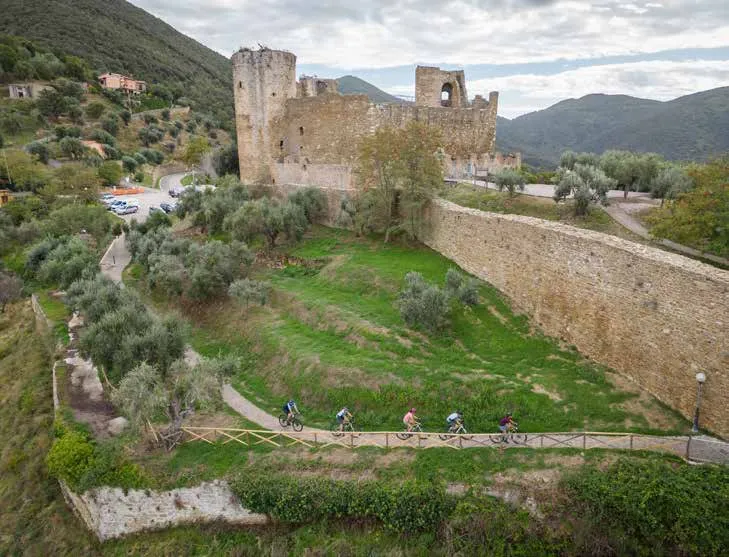
Rocca Pisana, the castle that commands the gulf
Scarlino derives its name from the Roman “Scabris Portus”—a challenging harbor with high cliffs that still conceal wild, barely accessible beaches. This limited access has become their blessing. Reaching them requires a steady climb from the jagged coast, pedaling through rough roads lined with Mediterranean vegetation. The reward is the castle that commands everything: plains on one side, gulf on the other. From atop Rocca Pisana, you can gauge distances while catching your breath, admiring the fortified coastline between two protective promontories. La Rocca, with its double walls, offers views stretching from Piombino to Punta Ala. Three towers stand guard: a square one facing southeast toward the sea, a rectangular one with shooting slits to the southwest, and a round northwestern tower—the final bulwark against modern tourist “invasions” as formidable as those of the past.
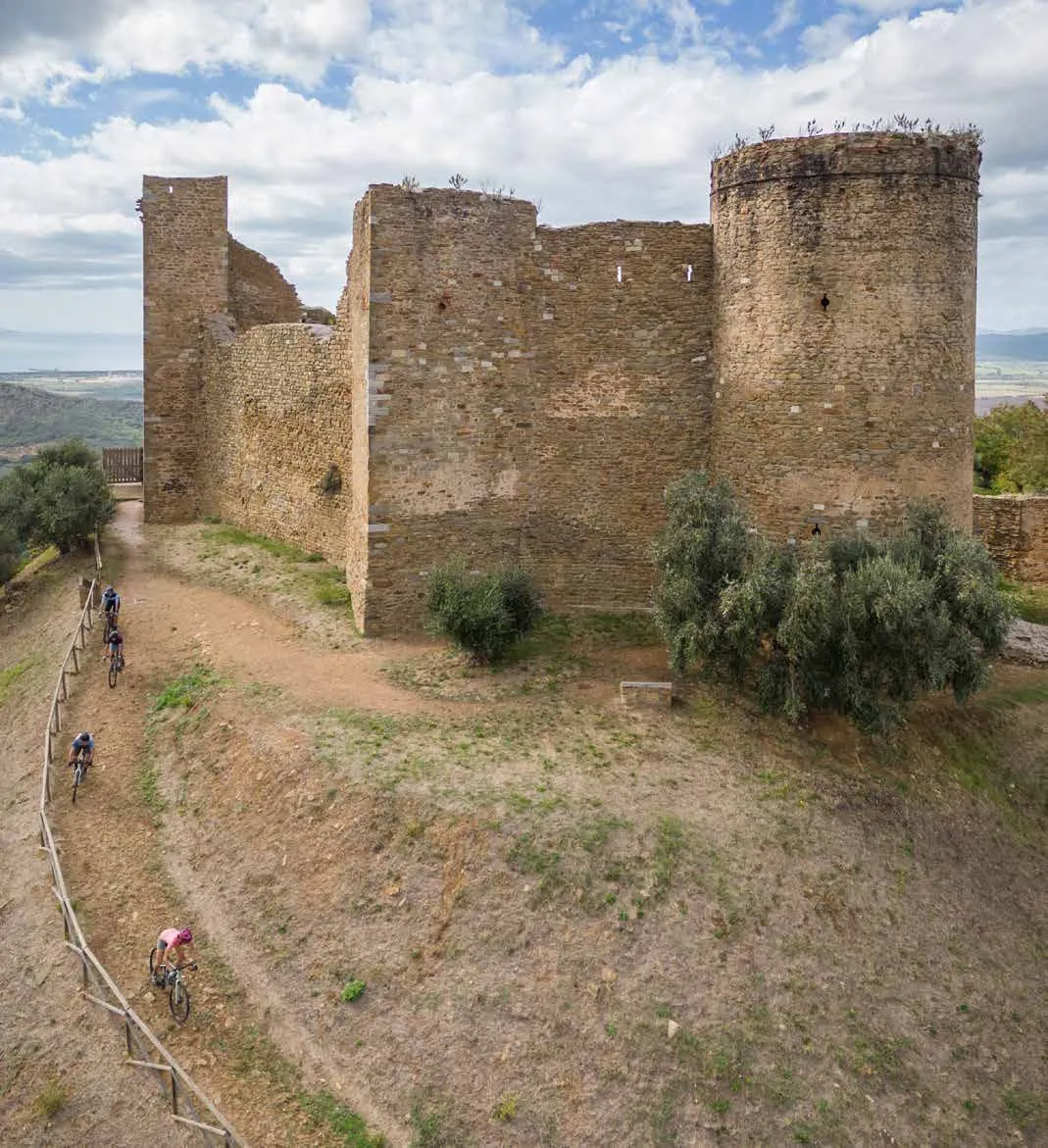
The hilltop castle places visitors at history’s crossroads.
In this part of Tuscany, castles emerged from early medieval agricultural estates—a connection that lives on through the many farms still cultivating this fertile land.
Red earth and the Bandite di Scarlino
The journey weaves between sea and hills, through ever-changing landscapes. In May’s early warmth, under bright skies, you traverse shaded pine forests that shield the coast from traffic. Beyond lies a dense wedge of vegetation and rocks climbing inland, past neat vineyards and gleaming olive groves. This perfect cycling route—where sea meets scrubland, history meets nature—crosses red earth that alternates between challenging rough patches and smooth stretches where thoughts flow freely with each pedal stroke.
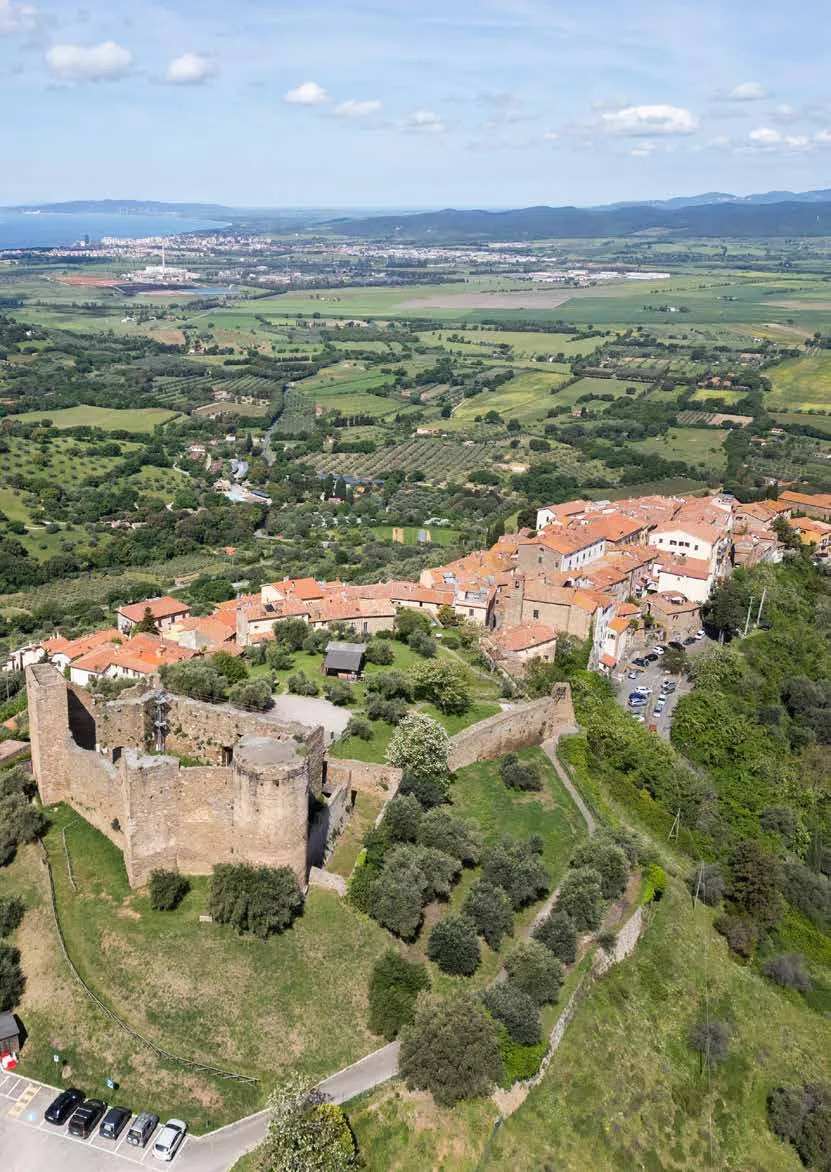
The hinterland spans 9,000 hectares, incorporating 200 kilometers of 50 marked trails. This natural reserve, the Bandite di Scarlino—named for its traditional public timber auctions—features fruit chestnuts, holm oaks, turkey oaks, butcher’s broom, and juniper. Ancient charcoal kiln sites connect via trails suitable for sustainable activities: hiking, cycling, and horseback riding. This exclusive habitat encompasses over a thousand coastal lagoons and salt steppes, vast grasslands, and woodland covering 53% of the reserve, with 40% being evergreen.